

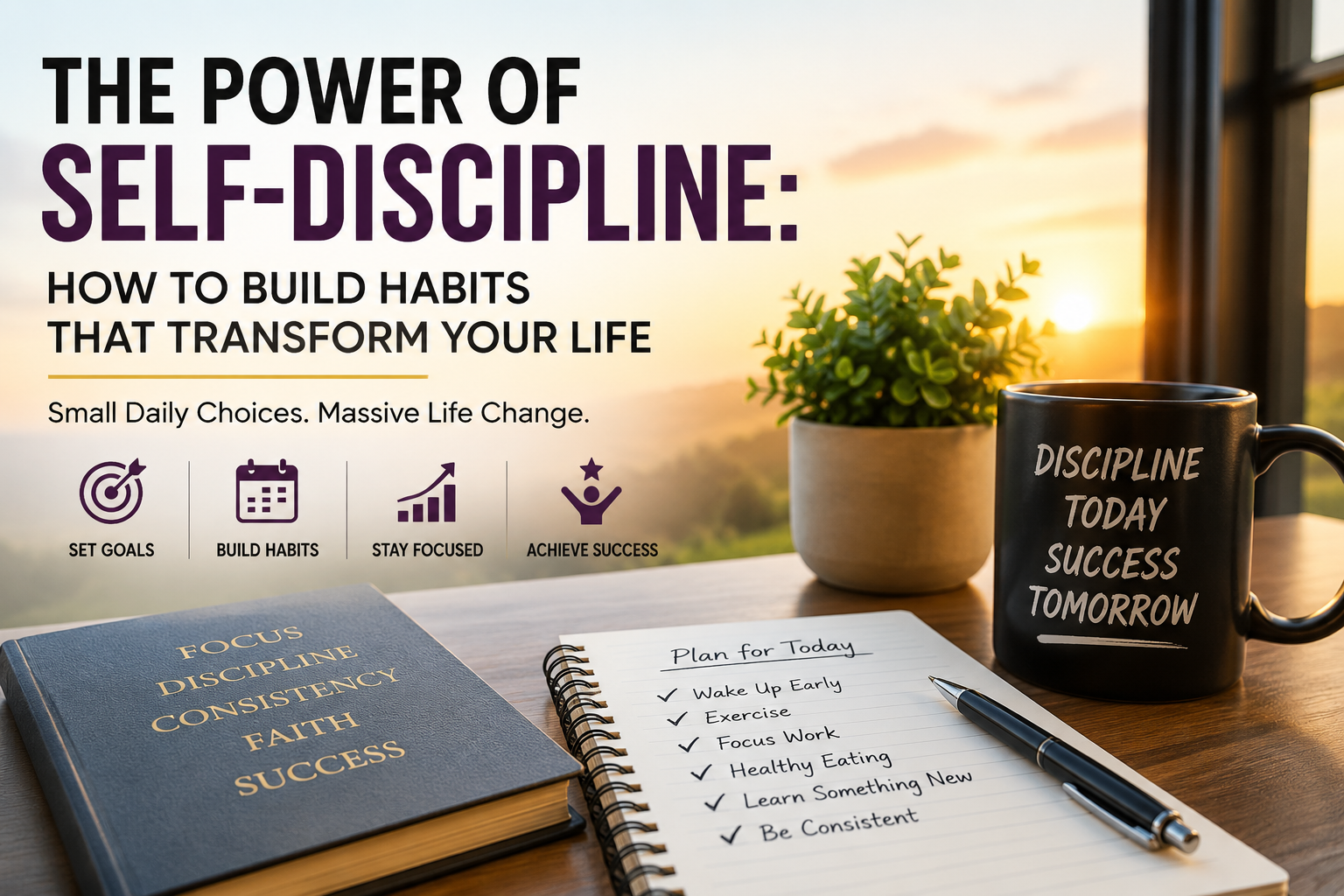

How to Build Habits That Transform Your Life
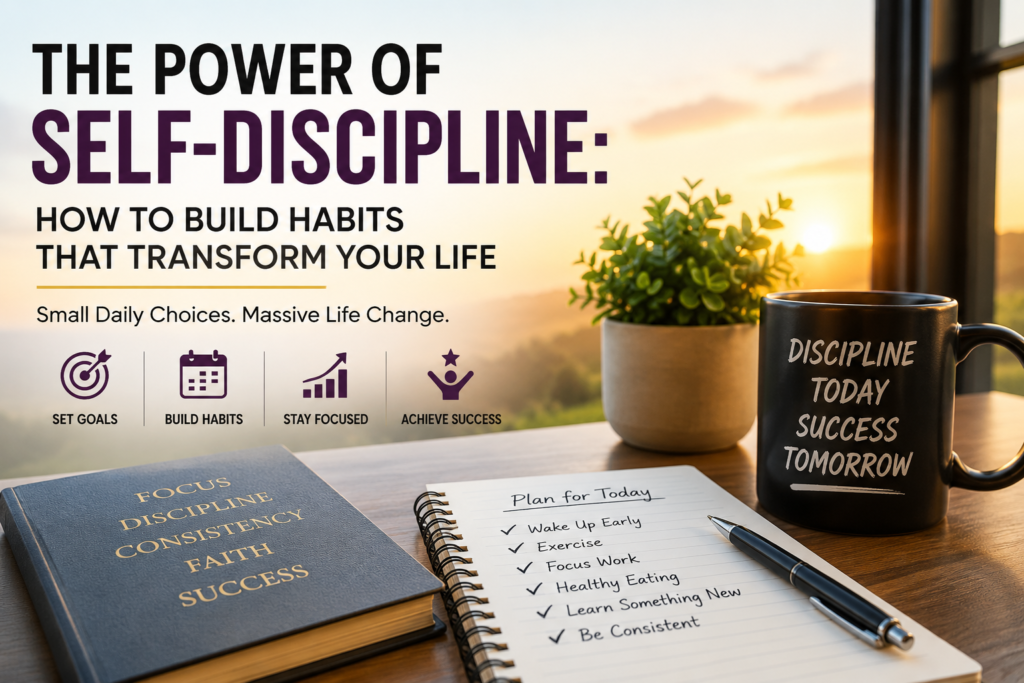
Introduction
Success Begins With the Decisions You Make Every Day
There is a common belief that successful people are somehow born with extraordinary talent, unlimited motivation or an unshakable drive that ordinary people simply do not possess. From the outside, it can appear that high achievers wake up every morning energized, inspired and naturally committed to doing the difficult things that others avoid. Social media often reinforces this illusion by showcasing only the highlights of success while hiding the years of effort, setbacks and quiet perseverance that made those achievements possible.
The truth is far different.
Behind almost every meaningful accomplishment is a person who chose discipline over excuses, consistency over convenience and long-term growth over short-term comfort. They did not succeed because every day felt easy. They succeeded because they developed the ability to act with purpose even when they lacked motivation.
This is the true power of self-discipline.
Self-discipline is not about living a rigid or joyless life. It is not about denying yourself every pleasure or working endlessly without rest. Rather, it is the ability to govern your thoughts, emotions and actions so they align with your values, your goals and the future you want to create. It is choosing what matters most instead of what feels easiest in the moment.
Every decision you make is shaping the person you are becoming. When you choose to wake up instead of hitting the snooze button, you strengthen discipline. When you complete an important task before scrolling through social media, you strengthen discipline. When you keep a promise to yourself despite feeling tired or discouraged, you strengthen discipline. These choices may seem small on their own yet, they accumulate over time to determine the direction of your life.
Think of self-discipline as the foundation of a house. Many people focus on visible success; the beautiful walls, elegant windows and impressive exterior, while overlooking the unseen foundation beneath it. A house built on weak foundations cannot withstand powerful storms. In the same way, careers, businesses, relationships and personal dreams cannot remain strong without the steady foundation of disciplined daily choices.
One of the greatest misconceptions about success is that motivation comes first and action follows. In reality, the opposite is often true. Motivation is unpredictable. It rises and falls with your emotions, circumstances and energy levels. Some mornings you may feel inspired to conquer the world. Other days, even simple tasks may feel overwhelming. If your progress depends entirely on how motivated you feel, your results will always be inconsistent.
Discipline provides something far more valuable than motivation: reliability.
It enables you to move forward when enthusiasm fades. It helps you continue when progress seems slow. It reminds you that meaningful transformation is built through repeated action rather than occasional bursts of inspiration. Motivation may help you start but, discipline ensures that you finish.
History consistently demonstrates this principle. Great leaders, accomplished athletes, successful entrepreneurs, respected scholars and influential creators rarely attribute their achievements solely to talent. While natural ability can open doors, discipline determines how far someone walks through them. Two individuals may begin with similar opportunities yet, the one who develops consistent habits of learning, improving and persevering will almost always outperform the one who relies only on potential.
The encouraging news is that self-discipline is not reserved for a gifted few. It is a skill that can be learned, strengthened and refined throughout your life. Just as muscles grow stronger through repeated training, discipline develops through repeated choices. Every time you honor your commitments, resist unnecessary distractions or remain faithful to your priorities, you are training your mind to become stronger.
This means your past does not define your future.
Perhaps you have started projects and never finished them. Maybe you have struggled with procrastination, inconsistency or self-doubt. You may have abandoned goals because life became difficult or because fear convinced you that success belonged to someone else. None of those experiences disqualify you from building a disciplined life. They simply reveal areas where new habits and new thinking are needed.
Transformation rarely happens overnight. Lasting change is usually quiet. It occurs one decision at a time, one habit at a time and one ordinary day after another. The person who commits to improving by just one percent each day may not notice dramatic results after a week but, over months and years the difference becomes extraordinary.
Discipline influences every area of life. It strengthens your health because, it helps you make better daily choices. It improves your finances because, it teaches delayed gratification and wise stewardship. It enhances your relationships because, it encourages patience, integrity and consistency. It supports your career because, dependable people earn trust and create opportunities. It deepens your faith because, spiritual maturity is nurtured through regular prayer, study, obedience and perseverance. Above all, discipline helps you become the kind of person who follows through on commitments regardless of changing circumstances.
Throughout this guide, you will discover that self-discipline is much more than forcing yourself to work harder. It is about building a life that reflects your deepest values and highest aspirations. You will learn why discipline matters more than temporary motivation, how habits shape your identity, what science teaches about lasting behavioral change and practical strategies you can begin applying immediately. You will also uncover common obstacles that quietly sabotage progress and learn how purpose and faith can provide lasting strength when challenges arise.
Imagine looking back one year from today and recognizing that your life has changed, not because of one dramatic event but, because of hundreds of intentional choices that gradually reshaped your character. Imagine becoming someone who keeps promises, completes important work, manages time wisely, faces challenges with courage and pursues goals with unwavering consistency. That transformation is not beyond your reach.
The journey begins with one decision.
Not tomorrow.
Not next Monday.
Not when circumstances become perfect.
It begins today.
The life you desire is built by the habits you practice. The future you dream about is shaped by the choices you make when no one is watching. Every disciplined action becomes another brick in the foundation of the person you are becoming.
Your greatest success will not be determined by what you know alone. It will be determined by what you consistently do.
That is the remarkable power of self-discipline.
What Is Self-Discipline?
Understanding the Skill That Shapes Every Area of Your Life
Before you can develop self-discipline, you must first understand what it truly is. The word “discipline” often carries negative associations. Some people immediately think of punishment, restriction or an endless cycle of forcing themselves to do things they dislike. Others imagine strict routines that leave no room for joy, creativity or spontaneity. These misconceptions have caused many people to resist the very habit that has the power to transform their lives.
In reality, self-discipline is not about punishment. It is about freedom.
It is the ability to make choices based on your long-term values rather than your temporary emotions. It is choosing what is right over what is easy, what is meaningful over what is comfortable and what will benefit your future over what only satisfies the present moment.
At its core, self-discipline is the practice of consistently directing your thoughts, emotions and actions toward a desired outcome regardless of how you feel in the moment. It is the bridge between setting a goal and accomplishing it. Without discipline, even the greatest dreams remain nothing more than good intentions.
Imagine a ship preparing to cross the ocean. The captain has a destination clearly marked on the map yet, powerful winds, changing tides and unexpected storms constantly attempt to push the vessel off course. Without a strong rudder and a committed captain making continual adjustments, the ship would drift wherever the current carried it.
Your life works much the same way.
Your goals represent your destination. Daily distractions, temptations, setbacks and emotional highs and lows are the changing weather. Self-discipline is the rudder that keeps you moving toward your destination despite the conditions around you. It does not eliminate life’s storms but, it prevents them from determining your direction.
Discipline Is a Skill, Not a Personality Trait
One of the most damaging myths about discipline is the belief that some people are naturally disciplined while others simply are not. This way of thinking convinces countless individuals that they were born without the qualities needed for success.
The truth is far more encouraging.
Self-discipline is a learned skill.
No one is born waking up at five o’clock every morning, managing money wisely, exercising consistently or resisting every temptation. These behaviors are developed through repetition, intentional practice and small daily decisions that gradually become part of a person’s character.
Just as muscles become stronger through regular exercise, discipline grows stronger every time you honor a commitment, complete an important task or resist the urge to take the easier path. Each disciplined choice reinforces the next one. Over time, what once required tremendous effort begins to feel natural.
This is why two people with similar intelligence, education and opportunities often experience dramatically different outcomes. The difference is rarely talent alone. More often, it is the accumulation of disciplined choices made over months and years.
The Difference Between Discipline and Motivation
Many people confuse discipline with motivation, believing they must first feel inspired before they can take meaningful action. While motivation can be helpful, it is also unpredictable. It changes with your mood, your circumstances, your energy level and even the weather.
There will be days when you feel energized and ready to tackle every challenge. On those days, taking action feels effortless.
There will also be days when you feel tired, discouraged, overwhelmed or uncertain. During those moments, motivation often disappears.
If your progress depends entirely on feeling motivated, your success will always be inconsistent.
Discipline works differently.
Discipline says, “I will keep my commitment because, I decided it was important.”
Motivation asks, “Do I feel like doing this today?”
Discipline answers, “Whether I feel like it or not, I know this action moves me closer to the life I want.”
That simple shift in thinking changes everything.
Successful people do not ignore their emotions. They simply refuse to allow temporary emotions to become permanent decision-makers.
Discipline Builds Trust With Yourself
One of the most overlooked benefits of self-discipline is that it strengthens self-trust.
Every promise you keep to yourself sends a powerful message to your mind:
“I am someone who follows through.”
Every promise you break tells the opposite story:
“I cannot depend on myself.”
These repeated messages gradually shape your identity.
When you consistently wake up at the time you planned, complete your work, honor your commitments and follow through on your goals, your confidence begins to grow naturally because you have evidence that your actions match your intentions.
Confidence is not built primarily through positive thinking.
Confidence is built by keeping promises to yourself.
The more you prove to yourself that your word matters, the stronger your self-belief becomes.
Self-Discipline Touches Every Area of Life
Many people view discipline as something that only applies to work or business. In reality, it influences nearly every aspect of your life.
A disciplined person is more likely to maintain healthy habits because, they continue making wise choices long after the excitement of starting a new fitness plan has faded.
A disciplined professional earns trust because, colleagues know they can be counted on to complete responsibilities with excellence.
A disciplined entrepreneur continues improving products, serving customers and solving problems even during difficult seasons when immediate results are not visible.
A disciplined student develops knowledge through consistent learning rather than last-minute effort.
A disciplined parent creates stability by remaining patient, present and intentional even on challenging days.
A disciplined believer grows spiritually through faithful prayer, study, worship and obedience rather than relying solely on emotional experiences.
In every area of life, discipline becomes the quiet force that turns potential into progress.
The Good News: You Can Start Today
Perhaps you have struggled with inconsistency in the past. Maybe you’ve started diets, businesses, books, exercise programs or personal goals only to lose momentum after a few weeks.
That does not mean you lack discipline.
It simply means your current systems, habits or mindset need improvement.
Your future is not determined by yesterday’s failures. It is shaped by the decisions you make beginning today.
Self-discipline is not developed in one dramatic moment. It is built through ordinary decisions repeated with extraordinary consistency.
Every time you choose preparation over procrastination, growth over comfort and purpose over distraction, you strengthen the person you are becoming.
You do not need to become perfect overnight.
You simply need to become intentional today.
That single decision, repeated consistently, has the power to transform your habits, reshape your character and ultimately change the course of your life.
Why Discipline Matters More Than Motivation
If there is one myth that has prevented more people from reaching their full potential than almost any other, it is the belief that they must feel motivated before they can take action.
How many times have you said to yourself, “I’ll start tomorrow when I feel more motivated,” or “I’m just not in the right mindset today”? These thoughts are common yet, they quietly rob countless people of opportunities, progress and personal growth.
The reality is simple but, powerful:
Motivation may help you begin. Discipline is what carries you to the finish line.
Motivation is an emotion. Like every emotion, it comes and goes. Some mornings you wake up energized, optimistic and eager to conquer the day. Everything feels possible. Your goals seem exciting and your confidence is high.
Other mornings feel completely different. You may be tired, discouraged, distracted or overwhelmed. The same goals that inspired you yesterday suddenly feel difficult. Nothing around you has necessarily changed but, your emotions have.
If your actions depend entirely on your emotions, your progress will always rise and fall with them.
Successful people understand something that many others never fully grasp:
Feelings are temporary. Decisions have lasting consequences.
The Motivation Trap
Motivation often creates an illusion of progress.
Watching an inspiring video, reading a powerful quote or attending a motivational seminar can make you feel unstoppable. Your mind races with ideas, your confidence rises and you promise yourself that this time everything will be different.
For a few days, you work with excitement.
Then life happens.
Work becomes stressful.
Unexpected bills appear.
Your energy drops.
You oversleep.
A problem arises in your family.
The excitement fades.
Without discipline, many people stop completely because, they confuse the loss of motivation with the end of the journey.
In reality, nothing has gone wrong.
You have simply reached the point where discipline becomes necessary.
This is where lasting transformation begins.
Discipline Creates Consistency
Imagine two people deciding to improve their physical health.
The first person exercises only when they feel inspired. They have excellent workouts on days when motivation is high but, skip entire weeks when life becomes busy or inconvenient.
The second person creates a schedule and commits to exercising regardless of mood. Some workouts are excellent. Others feel difficult. A few are completed with very little enthusiasm.
Fast forward one year.
Who is healthier?
Who is stronger?
Who has built lasting habits?
Almost always, it is the person who remained consistent rather than the person who relied on inspiration.
The same principle applies to every area of life.
Writing a book.
Building a business.
Growing your faith.
Improving your finances.
Strengthening relationships.
Learning a new skill.
Success rarely belongs to the person who works the hardest on their best days.
It belongs to the person who continues working on their ordinary days.
Consistency always outperforms occasional intensity.
The Hidden Power of Showing Up
One of the greatest lessons successful people learn is that simply showing up has incredible power.
There will be days when your work feels effortless.
There will also be days when every task feels difficult.
On those difficult days, your goal is not perfection.
Your goal is presence.
If you planned to write for one hour but, only manage twenty minutes, you are still building discipline.
If you planned to exercise for an hour but, complete thirty minutes, you are still reinforcing the habit.
If you planned to read two chapters but, finish one, you are still moving forward.
Progress is rarely destroyed by imperfection.
It is destroyed by quitting.
Every time you show up despite not feeling your best, you strengthen something far more valuable than the task itself.
You strengthen your identity.
You become the type of person who follows through.
Discipline Reduces Decision Fatigue
Every day you make hundreds of decisions.
What time will you wake up?
Will you exercise?
What will you eat?
Will you complete your most important task first or scroll through social media?
Will you save money or spend impulsively?
Will you react emotionally or respond thoughtfully?
Each decision consumes mental energy.
Highly disciplined people simplify their lives by reducing unnecessary decisions through routines and systems.
They wake up at similar times.
They schedule important work.
They plan meals.
They establish boundaries.
They prioritize what matters most.
Because, these actions become habitual, they require less mental effort over time.
Instead of negotiating with themselves every morning, they simply follow the systems they have already created.
This is one reason disciplined individuals often appear calmer and more productive.
They spend less energy deciding and more energy doing.
Discipline Builds Momentum
Imagine pushing a large boulder uphill.
At first, every step requires tremendous effort.
The weight feels overwhelming.
Progress is slow.
It would be easy to stop.
But, with each push, the boulder moves a little farther.
Eventually, momentum begins to help you.
The same principle applies to personal growth.
Starting is difficult.
Continuing becomes easier.
Eventually, disciplined actions become part of who you are.
This is why the first thirty days of building a new habit often feel like the hardest.
Your brain is learning a new pattern.
Once that pattern becomes familiar, consistency requires far less effort than it did in the beginning.
Momentum becomes your ally.
Discipline Strengthens Character
Perhaps the greatest reward of discipline is not external success.
It is internal transformation.
Each disciplined choice shapes your character.
Choosing honesty when dishonesty seems easier builds integrity.
Choosing patience develops emotional maturity.
Choosing forgiveness strengthens compassion.
Choosing responsibility develops leadership.
Choosing consistency builds trustworthiness.
Over time, these repeated decisions create a person who is respected not merely because of achievements but, because of who they have become.
Character is built quietly.
No audience applauds the early morning workout.
Few people notice the late-night studying.
Most never see the sacrifices made behind closed doors.
Yet those unseen decisions eventually produce visible results that everyone admires.
The Difference Between Interest and Commitment
Many people are interested in success.
Far fewer are committed to it.
Interest says,
“I’ll do it if it’s convenient.”
Commitment says,
“I’ll do it because it matters.”
Interest depends on favorable conditions.
Commitment creates progress despite unfavorable conditions.
This distinction changes everything.
When you become committed rather than merely interested, excuses begin to lose their power.
You stop asking whether you feel like taking action.
You begin asking whether today’s choices align with the person you are becoming.
Motivation Starts the Journey. Discipline Finishes It.
Motivation is a spark.
Discipline is the fuel that keeps the fire burning.
Motivation is exciting.
Discipline is dependable.
Motivation inspires action.
Discipline produces transformation.
If you wait until every day feels perfect, you may spend years waiting.
If you choose discipline instead, you will discover something remarkable:
Action often creates motivation.
The moment you begin working, your energy increases.
Your confidence grows.
Your focus sharpens.
Momentum replaces hesitation.
The most successful people in the world are not those who never struggle with motivation.
They are the ones who have learned to keep moving forward long after motivation has disappeared.
That is the true power of discipline.
It gives you the ability to build the life you desire one intentional decision at a time, regardless of how you feel.
And that is a skill that will serve you for the rest of your life.
The Science of Habit Formation
How Small Daily Actions Create Extraordinary Results
If self-discipline is the engine that drives personal growth, habits are the roads on which that engine travels every day.
Every successful person, whether they realize it or not, relies on habits far more than willpower. The healthiest people do not wake up each morning debating whether they should exercise. The most productive professionals do not negotiate with themselves every day about whether they should complete their most important work. Financially responsible individuals do not repeatedly decide whether saving money is important.
These behaviors have become habits.
That is the ultimate goal of self-discipline.
Not to force yourself forever but, to build routines that eventually require less effort because they become part of who you are.
Your Life Is the Sum of Your Daily Habits
Many people overestimate what they can accomplish in a single week and underestimate what they can achieve over several years.
We naturally focus on dramatic change.
We want instant results.
We want rapid transformation.
We want success to happen quickly.
Real life works differently.
Your future is rarely determined by one extraordinary decision. It is shaped by thousands of ordinary decisions repeated consistently over time.
Consider two individuals.
The first person reads just ten pages of a valuable book every day. The second never makes time for reading because, they are always waiting for the “perfect moment.”
One year later, the first person has likely finished more than a dozen books and gained hundreds of new ideas, perspectives and practical lessons. The second person may still have the same intentions they had twelve months earlier.
The difference was never one massive decision.
It was a small daily habit.
The same principle applies to health, finances, relationships, faith, leadership and business.
Small actions may appear insignificant in isolation but, when repeated consistently, they produce remarkable outcomes.
How Habits Are Created
Every habit begins with repetition.
The first time you perform a new behavior, your brain must consciously think through every step. It requires focus, effort and attention.
Think back to when you first learned to drive a car.
You had to think about adjusting the mirrors, fastening your seatbelt, checking your surroundings, steering, braking and following traffic signs all at once.
Everything required conscious effort.
Today, if you have been driving for years, many of those actions happen almost automatically.
The same process occurs with nearly every habit.
At first, discipline carries the habit.
Eventually, the habit supports the discipline.
What once felt difficult begins to feel normal.
This is why consistency matters more than intensity.
Performing a positive behavior repeatedly trains your mind to expect it as part of your daily routine.
Identity Drives Lasting Habits
Many people attempt to change their behavior without changing how they see themselves.
They say,
“I want to exercise.”
“I want to write a book.”
“I want to become more organized.”
Those goals are good but, they focus only on outcomes.
Lasting transformation begins with identity.
Instead of asking,
“What do I want to achieve?”
Ask,
“Who do I want to become?”
A person who says,
“I am becoming someone who values my health,”
is more likely to make healthier choices.
A person who believes,
“I am a disciplined entrepreneur,”
begins making decisions that reflect that identity.
A person who declares,
“I am a lifelong learner,”
naturally looks for opportunities to grow.
Every action you repeat becomes evidence supporting the identity you are building.
Each time you complete a workout, you reinforce the belief that you are someone who cares for your body.
Each time you finish an important task before checking social media, you strengthen the identity of someone who values focus.
Each time you keep a promise to yourself, you become the kind of person who follows through.
Your habits are constantly teaching you who you believe you are.
Start Small to Think Big
One of the biggest reasons people fail to build lasting habits is that they try to change everything at once.
They decide to wake up at 5:00 a.m., exercise for ninety minutes, eliminate all unhealthy food, read fifty pages a day, meditate, journal, start a business and learn a new language beginning tomorrow.
Within a few weeks, exhaustion replaces enthusiasm.
The problem was never ambition.
The problem was attempting too much, too soon.
Small, consistent actions are far more sustainable.
Instead of reading an entire book, commit to ten pages.
Instead of exercising for two hours, begin with twenty minutes.
Instead of completely changing your diet overnight, replace one unhealthy meal each day.
Instead of trying to organize your entire home, organize one room.
Progress built gradually is more likely to become permanent.
Environment Shapes Behavior
Many people blame themselves for lacking discipline when the real problem is the environment around them.
Your surroundings influence your choices far more than you may realize.
If unhealthy snacks are always visible, resisting temptation becomes more difficult.
If your phone constantly interrupts your work with notifications, maintaining focus becomes harder.
If your workspace is cluttered, productivity often declines.
Conversely, a well-designed environment makes positive habits easier.
Keep healthy foods where you can easily reach them.
Prepare your workout clothes the night before.
Leave a book on your bedside table.
Create a dedicated workspace free from unnecessary distractions.
Keep a journal where you will see it each morning.
Instead of relying entirely on willpower, design your environment to support the person you are becoming.
Success becomes much easier when your surroundings encourage your goals rather than compete with them.
Consistency Beats Perfection
Many people abandon good habits after one mistake.
They miss one workout.
They oversleep once.
They eat one unhealthy meal.
They skip one day of reading.
Instead of simply continuing the next day, they convince themselves they have failed.
This all-or-nothing mindset destroys progress.
Successful people understand an important principle:
Missing once is an accident.
Missing repeatedly becomes a habit.
Everyone has difficult days.
Life will interrupt your routine.
Unexpected challenges will arise.
The key is returning quickly rather than allowing one missed day to become one missed month.
Progress is measured by consistency over time, not perfection every day.
Patience Is Part of the Process
One of the greatest frustrations when building new habits is that visible results often appear slowly.
You may exercise consistently for several weeks before noticing significant physical changes.
You may write every day for months before completing your manuscript.
You may save money faithfully before seeing meaningful financial growth.
This delay discourages many people.
Yet beneath the surface, something remarkable is happening.
Your discipline is strengthening.
Your identity is changing.
Your character is developing.
Your habits are becoming deeply rooted.
Long before others notice the results, you are becoming a different person.
Eventually, the invisible work becomes visible success.
Every Habit Is Casting a Vote for Your Future
Imagine that every decision you make is a vote.
Each healthy meal is a vote for becoming healthier.
Each hour spent learning is a vote for becoming wiser.
Each act of kindness is a vote for becoming more compassionate.
Each disciplined work session is a vote for becoming more successful.
No single vote determines the final outcome.
But over time, thousands of small votes shape the person you become.
That is why habits matter so much.
You are never simply completing today’s task.
You are casting another vote for the future version of yourself.
Choose your habits carefully.
Because the life you experience tomorrow is being quietly built by the choices you make today.
The extraordinary life you desire is not created by extraordinary moments alone.
It is created by ordinary habits practiced with extraordinary consistency.
Proven Strategies to Build Self-Discipline and Create Habits That Last
Understanding self-discipline is valuable. Understanding how habits are formed is empowering. But knowledge alone does not change a life. Transformation happens only when understanding is followed by action.
Many people spend years reading books, watching motivational videos and listening to inspiring podcasts, yet they continue living the same way because information without application produces very little change.
Self-discipline is not something you simply learn. It is something you practice.
Like building physical strength, discipline grows through repetition. Every decision you make either strengthens your ability to lead yourself or reinforces the habits that keep you stuck.
The good news is that you do not need to completely reinvent your life overnight. Lasting change rarely happens through dramatic transformations. It is usually the result of small, intentional actions repeated consistently over time.
The following ten strategies have helped successful leaders, entrepreneurs, athletes, professionals and high achievers build the discipline necessary to accomplish meaningful goals. More importantly, they are practical enough for anyone to begin applying today.
1. Begin With a Clear Vision of the Person You Want to Become
Every disciplined life begins with clarity.
Without a clear destination, even the hardest work can feel meaningless. Many people know they want a better life, but they cannot clearly describe what “better” actually looks like. As a result, they move from one idea to another without making lasting progress.
Instead of focusing only on what you want to accomplish, begin by asking a deeper question:
Who do I want to become?
Do you want to become a dependable leader? A healthier individual? A wiser parent? A successful entrepreneur? A stronger person of faith? A lifelong learner?
Your habits should support the identity you are building.
When your daily actions reflect your long-term vision, discipline becomes much easier because every decision has a purpose.
Take time to write a personal vision statement describing the kind of person you want to become over the next five years. Read it regularly and allow it to guide your daily choices.
2. Set Goals That Lead to Daily Action
Dreams inspire. Goals create direction. Daily actions produce results.
Many people create goals that are so broad they become overwhelming.
“I want to lose weight.”
“I want to become wealthy.”
“I want to start a business.”
“I want to write a book.”
These aspirations are valuable, but they do not tell you what to do today.
Break every major goal into small daily actions that are impossible to misunderstand.
If your goal is writing a book, commit to writing five hundred words each day.
If your goal is improving your health, schedule thirty minutes of movement every morning.
If your goal is building a business, dedicate one focused hour each day to activities that generate revenue.
Large goals become achievable when they are divided into consistent daily behaviors.
3. Create a Morning Routine That Builds Momentum
The first hour of your day often determines the direction of the next sixteen.
When mornings begin with distraction, rushing and reactive behavior, it becomes much harder to remain focused throughout the day.
Develop a morning routine that prepares your mind before the demands of the day begin.
Your routine does not need to be complicated. It simply needs to be intentional.
Consider including activities such as prayer, gratitude, reading, journaling, planning your priorities, exercising or spending a few quiet moments reflecting on your purpose.
A strong morning routine creates momentum that carries into every area of life.
You begin each day leading yourself instead of reacting to circumstances.
4. Eliminate Temptation Before It Becomes a Battle
Many people believe disciplined individuals possess extraordinary willpower.
In reality, they often succeed because they remove unnecessary temptation before it becomes a problem.
The easiest temptation to resist is the one you never place in front of yourself.
If your phone constantly interrupts your work, silence notifications or place it in another room.
If unhealthy snacks derail your nutrition, stop bringing them into your home.
If television keeps you from reading, create a dedicated reading space away from distractions.
Your environment should make your desired habits easier and unwanted habits more difficult.
The less often you rely solely on willpower, the more consistent your discipline becomes.
5. Keep Promises to Yourself
Your relationship with yourself is built on trust.
Every promise you keep strengthens that trust.
Every promise you repeatedly break weakens it.
If you promise yourself that you will exercise, complete the workout.
If you commit to studying, protect that appointment.
If you decide to save money this month, honor that commitment.
Start with promises you know you can keep.
As your confidence grows, gradually increase your expectations.
The greatest source of self-confidence is evidence.
Keeping promises to yourself provides that evidence every single day.
6. Learn to Become Comfortable With Temporary Discomfort
Growth almost always requires discomfort.
Muscles become stronger because they experience resistance.
Knowledge grows because the mind is challenged.
Businesses expand because entrepreneurs solve difficult problems.
Character develops because people continue doing what is right even when it is not easy.
Many people mistake discomfort for failure.
Successful people understand that discomfort is often evidence of progress.
When you learn to welcome temporary discomfort as part of long-term growth, discipline becomes less intimidating.
Instead of asking, “How can I avoid difficulty?”
Begin asking, “What is this challenge preparing me to become?”
Your willingness to embrace short-term discomfort often determines your long-term success.
7. Track Your Progress Every Day
What gets measured usually gets improved.
Keeping track of your habits creates awareness, accountability and motivation.
Use a notebook, planner or digital habit tracker to record the actions that matter most.
Track your workouts.
Track your reading.
Track your writing.
Track your savings.
Track your prayer time.
Track your daily priorities.
The goal is not perfection.
The goal is consistency.
Watching your progress accumulate becomes powerful evidence that you are becoming the person you intended to become.
8. Surround Yourself With People Who Challenge You to Grow
Your environment includes more than your physical surroundings.
It also includes the people you spend the most time with.
Attitudes are contagious.
Standards are contagious.
Work ethic is contagious.
Optimism is contagious.
Negativity is equally contagious.
Choose relationships that encourage integrity, personal responsibility, growth and excellence.
Seek mentors who have already achieved what you hope to accomplish.
Join communities that challenge you to become better rather than comfortable.
Your future is often influenced by the conversations you repeatedly have and the people you consistently allow to shape your thinking.
9. Celebrate Progress Without Becoming Complacent
Discipline should not feel like endless pressure.
Healthy growth includes recognizing milestones along the journey.
Celebrate consistency.
Celebrate improvement.
Celebrate learning.
Celebrate perseverance.
These moments remind you that your efforts are producing results.
However, never allow success to become an excuse for complacency.
Every achievement is a platform for the next stage of growth.
Remain grateful for your progress while continuing to pursue excellence.
10. Never Miss Twice
Perhaps the most powerful principle in building lasting discipline is this:
Everyone makes mistakes.
Everyone experiences setbacks.
Everyone has difficult days.
Missing one workout is not failure.
Skipping one day of writing is not failure.
Oversleeping once is not failure.
The real danger comes when one missed day becomes two, then three, then a week and eventually a completely abandoned goal.
Adopt one simple rule:
Never miss twice.
If life interrupts your routine today, return tomorrow.
If you make a mistake this morning, make your next decision a better one.
Do not allow temporary setbacks to become permanent patterns.
Consistency is not about perfection.
It is about returning to your commitments again and again until disciplined action becomes your new normal.
Small Choices Create Extraordinary Lives
Many people spend years searching for a secret formula for success.
In reality, there is no hidden shortcut.
There are only daily decisions.
Every morning presents an opportunity to become slightly wiser, slightly stronger, slightly healthier, slightly more focused and slightly more disciplined than you were yesterday.
These improvements may appear insignificant at first.
Yet over months and years, they compound into remarkable transformation.
Extraordinary lives are rarely built through extraordinary moments alone.
They are built through ordinary choices made with extraordinary consistency.
When you commit to practicing these strategies every day, discipline gradually stops feeling like something you force yourself to do.
Instead, it becomes part of your identity.
And once discipline becomes part of who you are, success becomes far more than an occasional achievement.
It becomes a way of life.

One response to “The Power of Self-Discipline”
Hi, this is a comment.
To get started with moderating, editing, and deleting comments, please visit the Comments screen in the dashboard.
Commenter avatars come from Gravatar.